Annaberger Impuls I
Lugau

Wood and stone: artistic creation in the Ore Mountains and Central Saxony
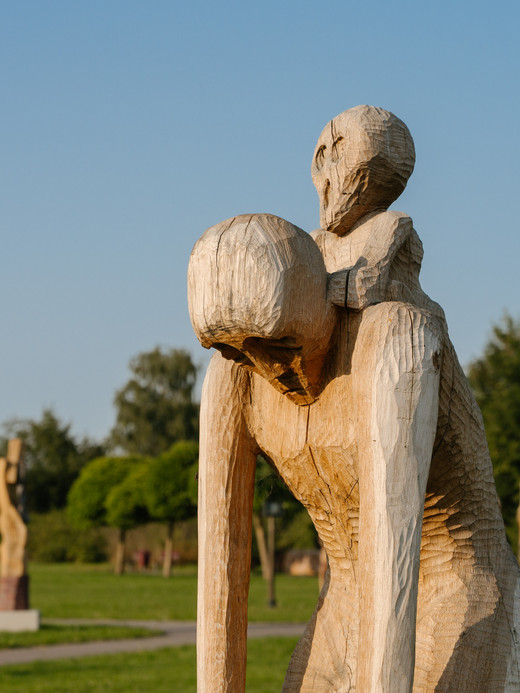
Some of them have known each other for decades, the crème de la crème of artists from the Ore Mountains and their Czech friends. They work across disciplines, in different media and materials. As the Annaberg Network, they curated sculptures for two exhibitions. You can experience works made from traditional materials, wood and stone.
Taking part in Lugau are: Rolf Büttner, Roland Buschmann, Sebastian Mvller, Christoph Roßner, Uwe Schwarz, Jörg Seifert, Thomas Suchomel, Silvio Ukat.
Annaberger Impuls I: Wood
With works by: Rolf Büttner, Roland Buschmann, Sebastian Mvller, Christoph Roßner, Uwe Schwarz, Jörg Seifert, Thomas Suchomel, Silvio Ukat
Material: oak wood
Erected by the town of Lugau/Erzgeb. with the kind support of BGH Edelstahl Lugau GmbH.
Address:
in Stadtpark Lugau
09385 Lugau (on the coal railway cycle path)

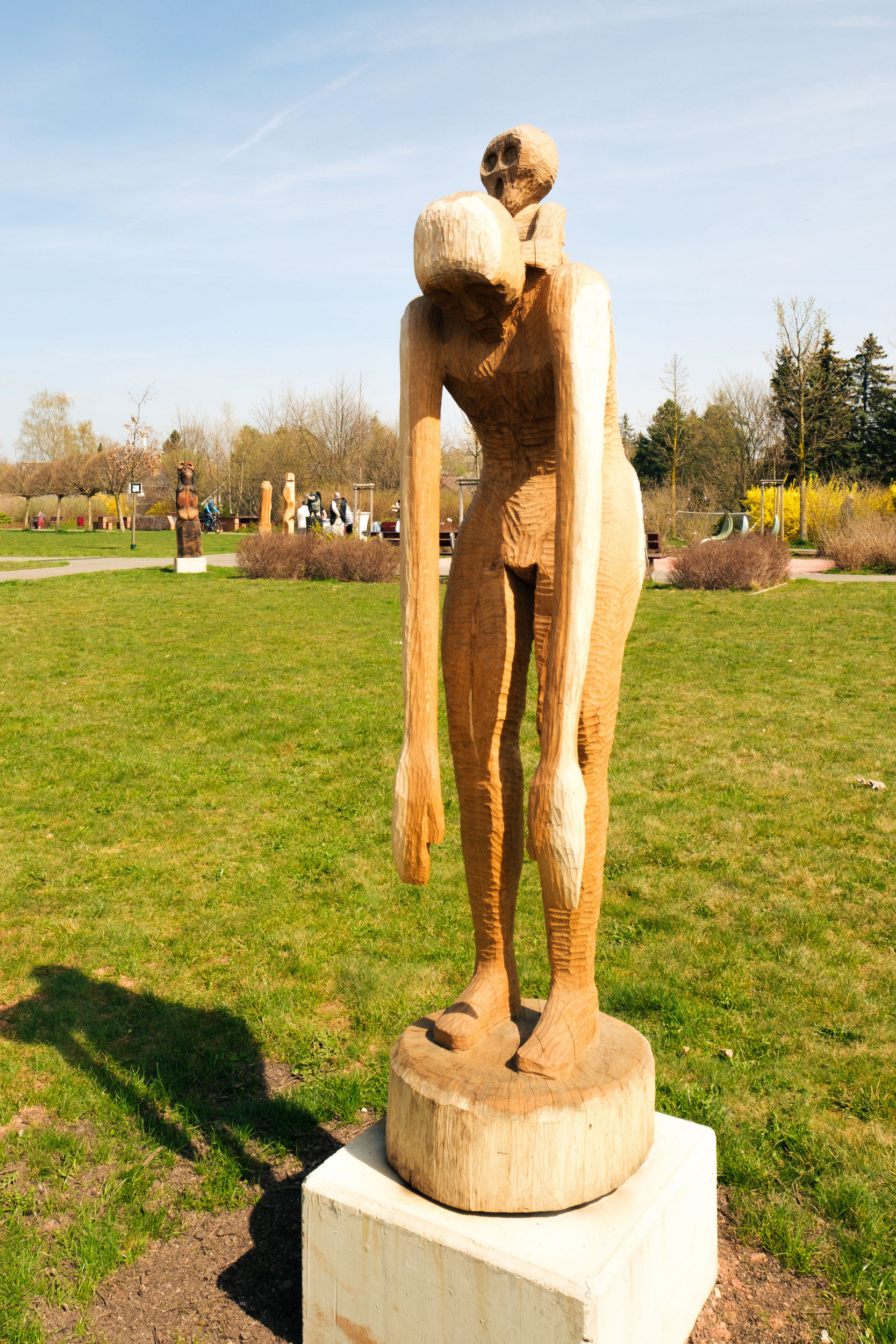
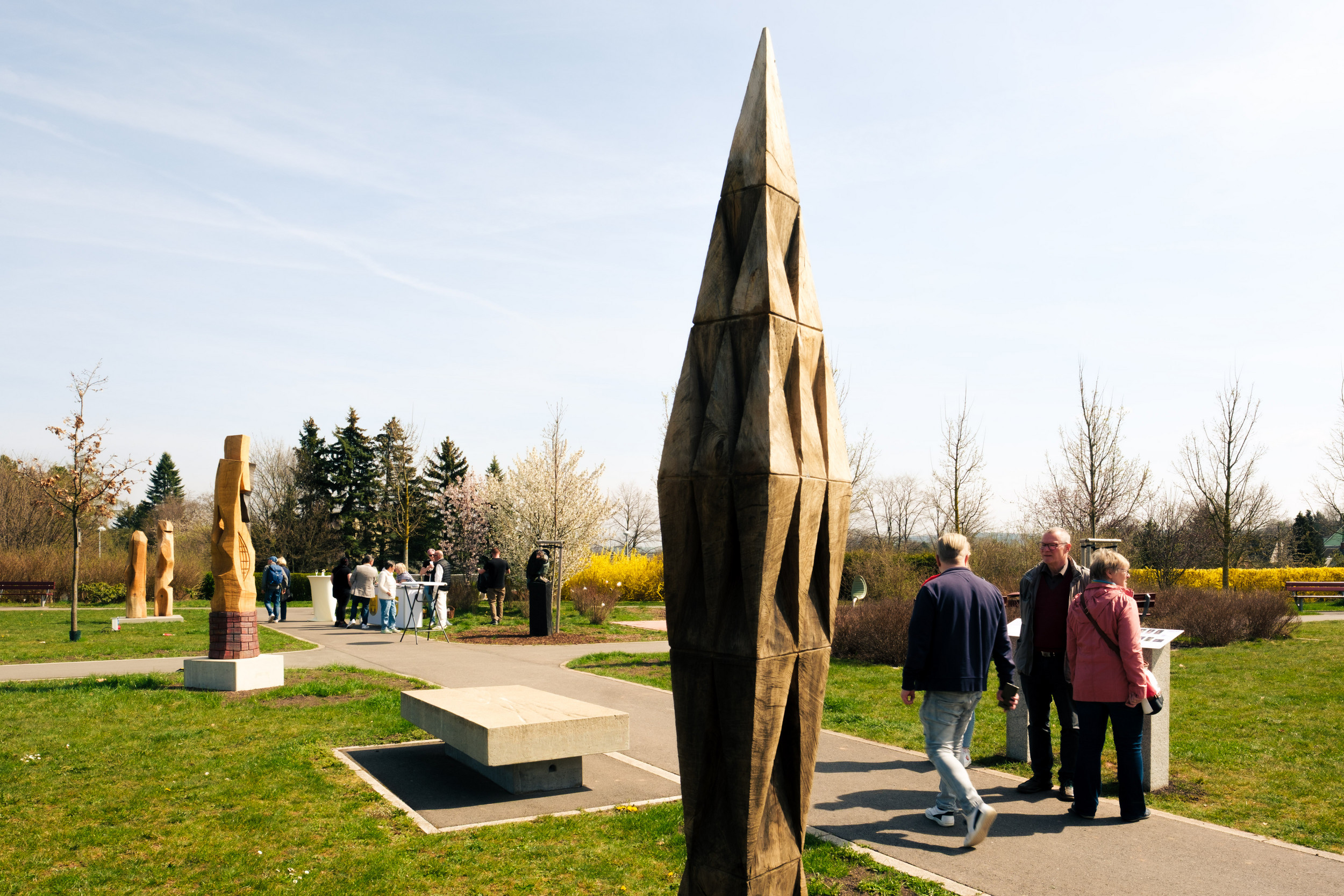
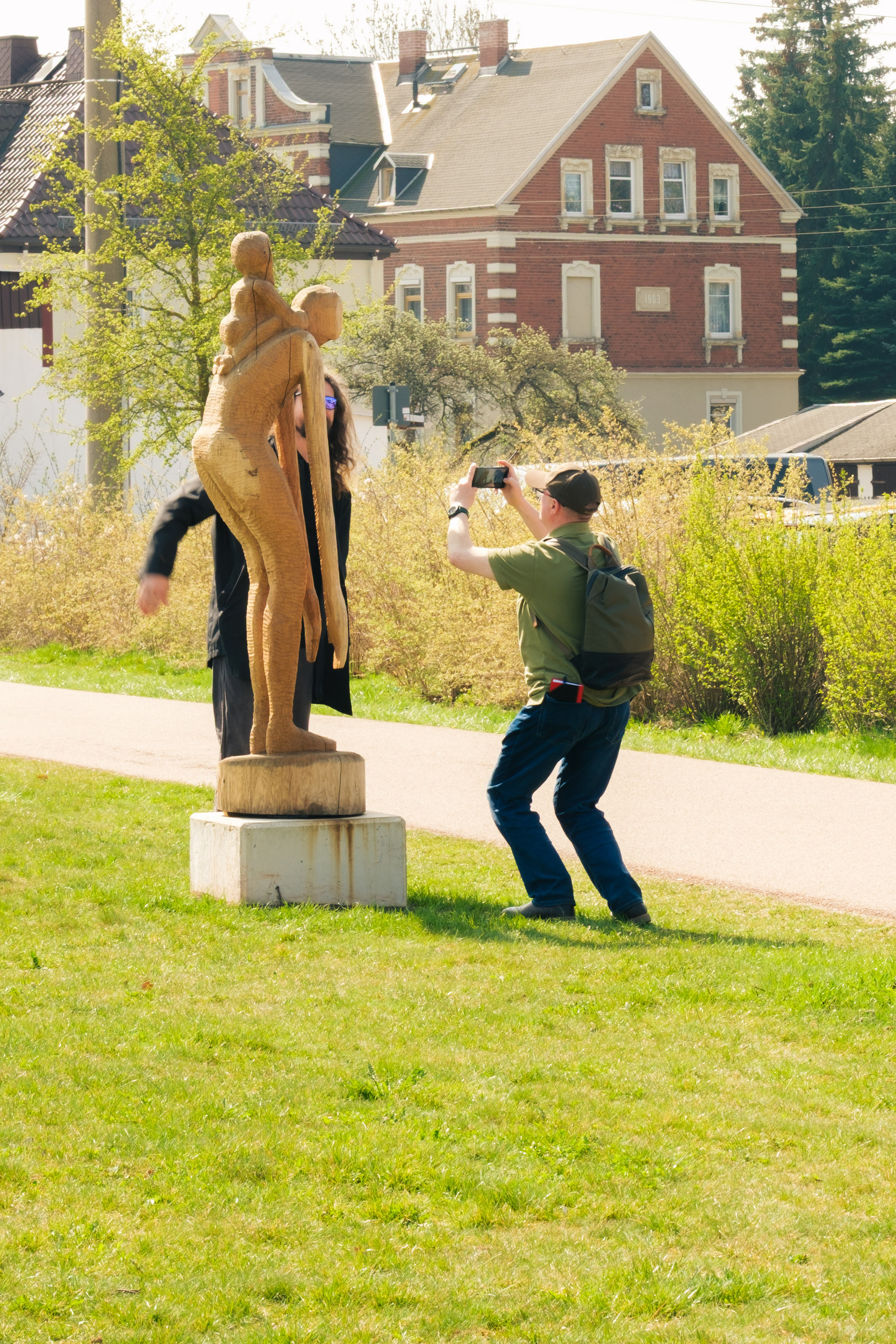
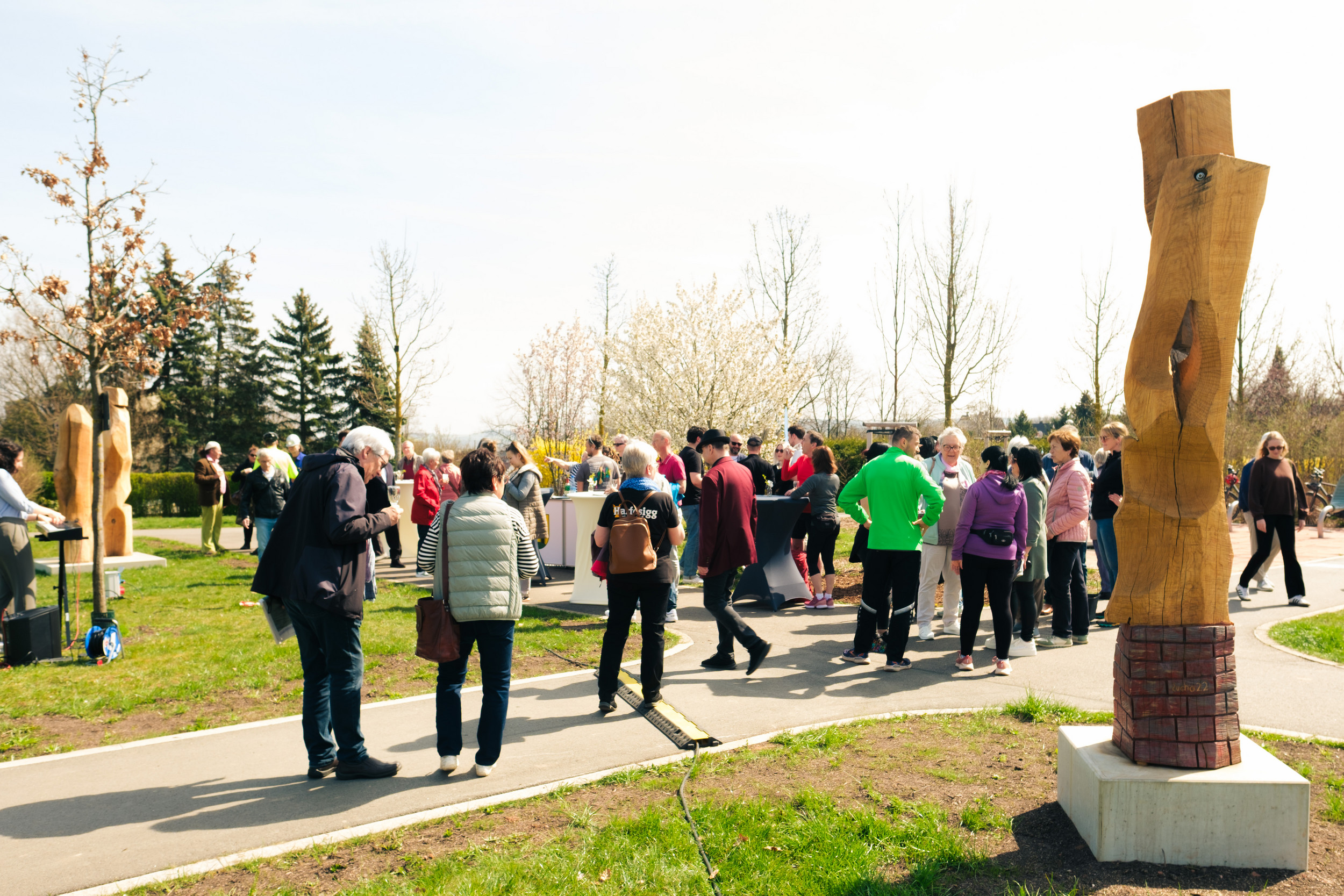
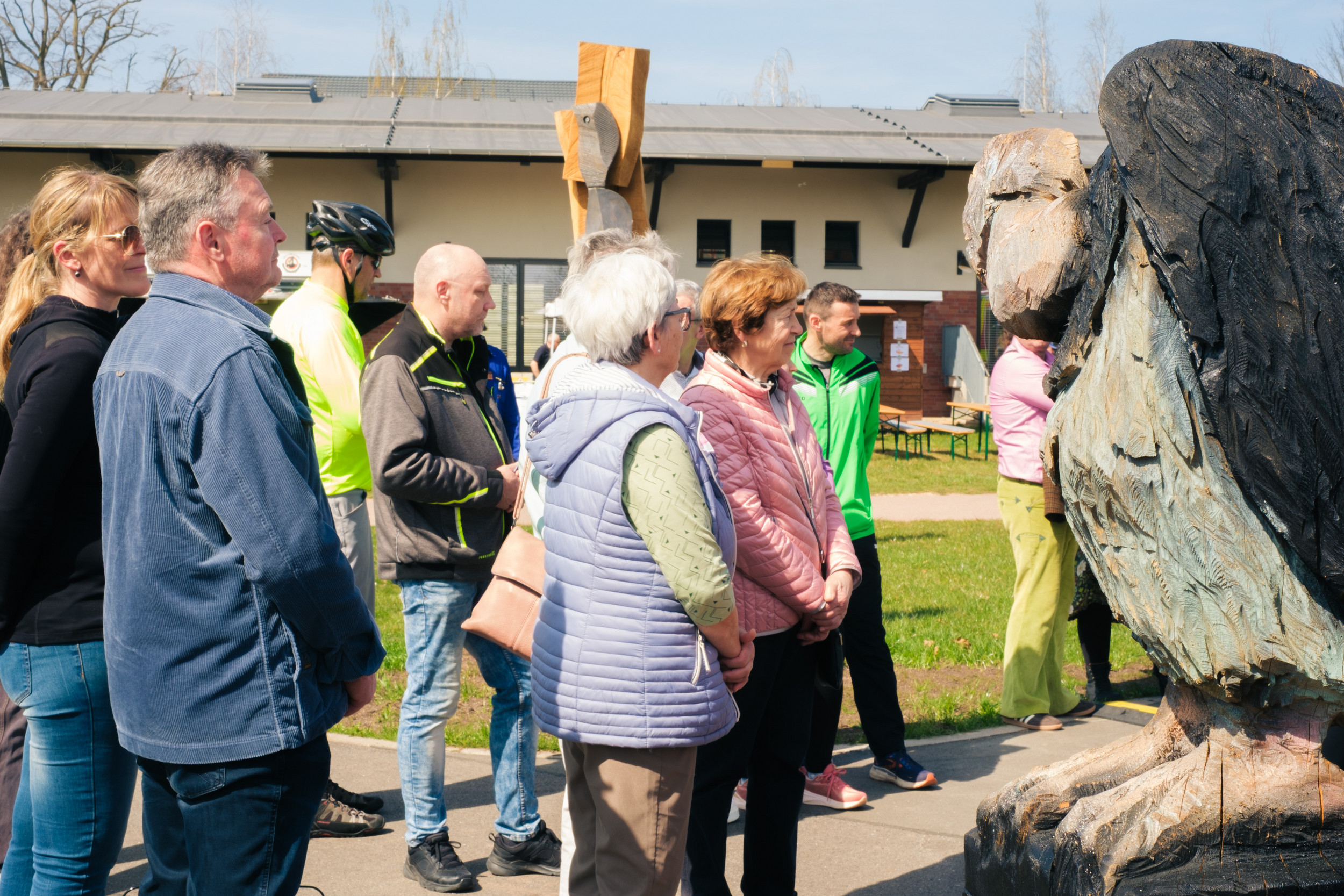
Where the wooden sculptures by the artist group Annaberger Impuls I stand today, trains once rolled with coal. The Lugau town park, which has been the town's new "green centre" since 2014, was once the site of the Chemnitz-Würschnitz railway company's station. From 1858, it transported coal from the Lugau-Oelsnitz coalfield to the industrial centre of Chemnitz and fuelled the steam engines of the textile industry.
The founding of the districts of Ursprung, Kirchberg, Erlbach and (Nieder-)Lugau dates back to the 12th century. Until the middle of the 19th century, farms characterised the townscape and agriculture characterised the economic livelihood of the people. Until the night of 6 to 7 January 1844, when coal worth mining was discovered in the Neuoelsnitz area near the border with Niederwürschnitz - between Lugau and Stollberg.
The coal boom triggered an enormous wave of immigration: In 50 years, the population grew 20-fold. Villages grew into towns between the shafts. Coal production peaked before the First World War, but then deposits and demand ran out. in 1972, the last coal mine in the area closed: the Karl Liebknecht shaft in Oelsnitz, now the Coal World Mining Museum and the site of the PURPLE PATH artwork Beyond Horizons 2025 by James Turrell.
Preserving memories, exploring the landscape, fostering community: town park, sports centre, museum and coal railway cycle path
After the last goods train rolled through in September 1996, the Lugau goods station fell into a deep sleep. What was to be done with the wasteland? An urban development project created the new "green centre" by 2014: a town park with a fitness trail, barbecue area and playground as well as the restored station building, now the Haus des Sports, which is home to the Eichenkranz Lugau 1908 e.V. wrestling club, among others.
The old railway maintenance depot in the town park, which dates back to 1858, also remains from the coal era. The Lugau railway enthusiasts, a youth initiative, have maintained a small museum with a historical exhibition here since 2019 and preserve the memory of more than 120 years of coal tradition.
In 2009, all of the railway tracks on the Lugau-Wüstenbrand section were dismantled. Today, the tourist coal railway cycle path runs along this section, allowing visitors to explore the region in comfort.
More about "Leisure in Lugau" at stadt-lugau.de
Altars to kneel down to: Kreuzkirche Lugau
The Kreuzkirche of the Evangelical Lutheran parish of Lugau-Niederwürschnitz has borne this name since 1954. Today, visitors can see a hall church in the neo-Romanesque style from 1842/43, when the previous building, which can be traced back to the 13th century, was demolished.
Only a few sacred works of art remain from the old church, such as the late Gothic Pietà (16th century). The wooden crucifix with a figure of Jesus (1502) towers in the centre of the chancel. It is the work of the important Renaissance carver Peter Breuer (around 1472-1541) from Zwickau.
Innovation and a sense of tradition, openness and immigration have always ensured the survival of the Lugau-Oelsnitz coalfield. All of this bears witness to many transformation processes that reach far back into history and in some cases continue to this day. The region has always been on the move. People came and went with the economic ups and downs, reinvented themselves culturally and further developed crafts and technology. This is still the case today.
Terra Ursprung: Ines and Roger Herold's house of the future
A modern "half-timbered house" made of steel and wood stands on the site of a traditional four-sided farm in the Ursprung district of Lugau: the Terra Ursprung house of the future combines visionary architecture with a sustainable energy supply and an open community concept. The house is completely self-sufficient in energy: photovoltaics generate electricity from sunlight. Green hydrogen is also produced, stored and used to generate energy - an extraordinary pilot project that was launched in 2021.
But Terra Ursprung is more than just a technical showcase for energy self-sufficiency: it sees itself as a meeting place for education, culture and innovation. The two initiators, Ines and Roger Herold - she is a management expert, he is a steel construction expert - open their building to creative people to provide space for new ideas. Workshops, lectures and creative events make the Terra.Hub a place of exchange, encounters and inspiration, where ideas for the future of rural life are born.